
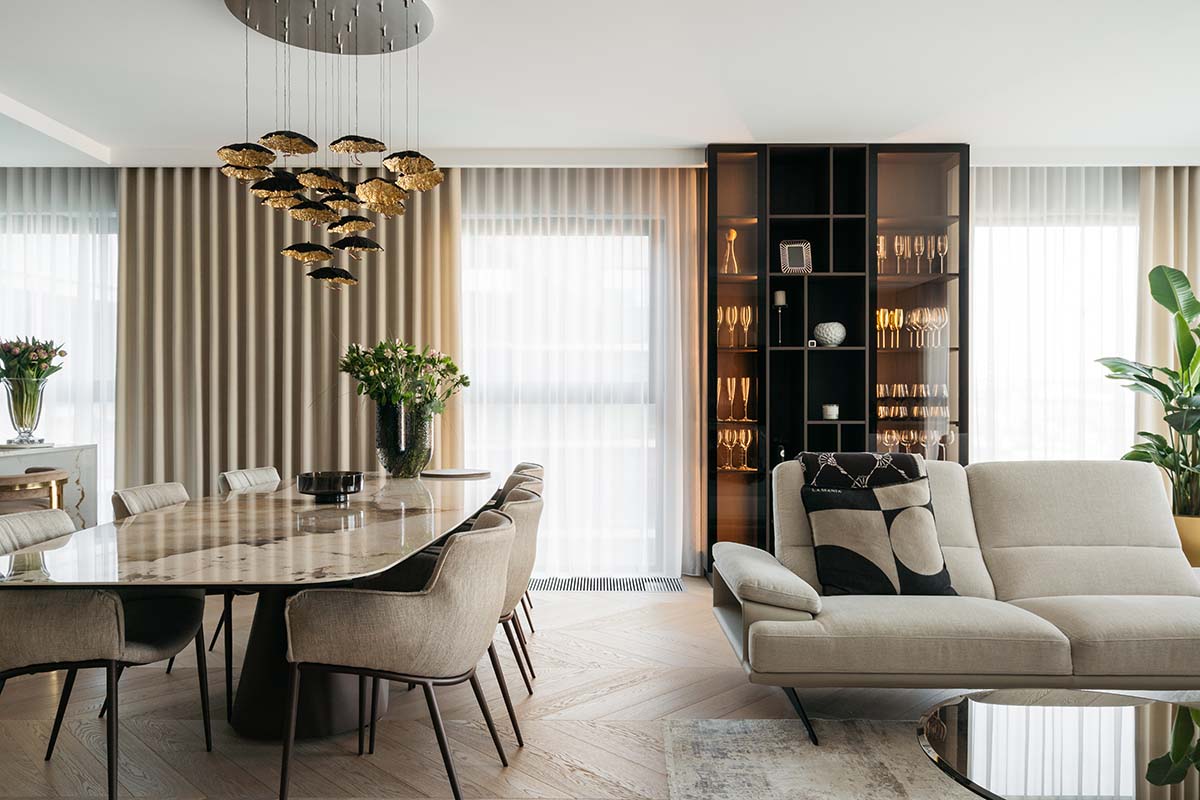
From Concept to Completion: How Luxury Interiors Are Delivered in Florida
Most interior projects don’t fail because of bad design. They fail because of everything that happens between the first sketch and move-in day — and nobody was responsible for managing it.
You’ve probably heard some version of this story. A homeowner hires a designer they love, gets excited about the concept, then spends the next twelve months coordinating contractors who don’t talk to each other, chasing deliveries that arrive late, and watching the budget creep past every estimate. By the time they move in, the original vision has been compromised so many times it barely resembles the mood board they fell in love with.
This isn’t rare. It’s the standard experience of interior projects in the US market — including Florida’s luxury segment. And it happens not because the designers are bad or the contractors are incompetent. It happens because the process itself is fragmented.
The Fragmentation Problem
A typical luxury interior project involves five to ten independent parties: an interior designer, an architect, a general contractor, subcontractors for electrical and plumbing, a furniture supplier, a custom millwork shop, an appliance vendor, and whoever you call when something doesn’t fit or arrives damaged.
Each of these parties is responsible for their own piece. Nobody is responsible for the whole.
The homeowner — or their property manager — ends up filling that gap. They become the de facto project coordinator, making decisions they weren’t prepared to make, resolving conflicts between parties who each have a different definition of “done,” and absorbing the cost and stress of every misalignment along the way.
For a primary residence, that’s exhausting. For an investment property — where delays directly translate to lost rental income or a delayed sale — it’s expensive.
“The most common thing we hear from clients before they work with us: ‘I thought the hard part was choosing the design. I had no idea the hard part was everything after that.'”
What a Structured Process Actually Looks Like
There’s a different way to deliver an interior — one where a single team takes responsibility for the entire journey, from the first design conversation to the day you walk through the finished door. Here’s what that process looks like in practice.
Initial consultation — understanding your property and goals
Before any design work begins, the team needs to understand your property type, how you’ll use the space, your timeline, and what success looks like for you. For investment properties, this includes rental positioning and resale considerations. For primary residences, it means understanding how you actually live.
Concept development — design, layout, and material direction
A full interior concept covers spatial planning, material palettes, lighting strategy, and furniture direction — not just mood boards. Every decision at this stage has downstream implications for construction and production, so it’s made with the full picture in mind.
Custom furniture design and production
When furniture is designed alongside the concept — not sourced afterward — it fits the space precisely. Proportions, materials, and finishes are developed as part of the same vision. Production happens in a controlled facility, not assembled from catalog options.
Contractor coordination and construction management
All on-site trades — general construction, electrical, plumbing, flooring, painting — are coordinated within one timeline. The client doesn’t manage relationships between contractors. The project team does.
Final installation and delivery
Everything arrives together, gets installed as a complete interior, and is handed over finished — not “mostly done with a few things still coming.” Move-in ready means move-in ready.
Fragmented vs. Integrated — A Clear Comparison
The difference between the two approaches isn’t just about convenience. It shows up directly in the result and the experience of getting there.
Fragmented approach
- Multiple vendors managed by the client
- Furniture sourced after design is finalized
- Budget tracked across separate contracts
- Timeline depends on slowest party
- Design compromised during execution
- Handover often incomplete or staged
Integrated approach
- One team, one point of contact
- Furniture designed with the concept
- Single budget with full transparency
- Timeline managed end-to-end
- Concept delivered as intended
- Fully finished interior at handover
Why This Matters Specifically in Florida
Florida’s luxury real estate market has some characteristics that make the integrated approach especially valuable — and the fragmented one especially risky.
Many clients purchasing or developing properties in Sarasota, Naples, or the Miami area are not local. They’re investing in a second home, a vacation property, or a rental asset from out of state — sometimes from another country. They cannot be on-site to manage contractors. They cannot make fast decisions when a vendor calls with a problem at 7 AM on a Tuesday. They need a team that handles the process entirely, keeps them informed, and delivers a finished result they can trust.
Additionally, Florida’s construction environment — with its permit timelines, hurricane-rated building requirements, and humidity considerations for materials — adds layers of complexity that are best managed by a team that has done it before, locally, and knows the landscape.
What You Should Expect From Any Full-Service Team
If you’re evaluating interior design and build partners for a Florida project, there are a few things worth asking about before you commit:
Do they control their own furniture production, or are they sourcing from third-party suppliers with their own lead times and quality variables? Who manages the contractors — you or them? Is there a single budget document that covers the entire scope, or will you be signing separate contracts with each party? And what does “completion” mean to them — because it should mean a fully finished, installed, move-in-ready interior, not “we’re done with our part.”
The answers to those questions will tell you more about how your project will go than any mood board or portfolio ever could.
How We Work at Omnicreatio
At Omnicreatio, we take full responsibility for every stage of the interior process — design, custom furniture production, contractor coordination, and final installation. Our clients in Florida work with one team from the first conversation to the day they receive the keys to a finished space.
We don’t manage the design and hand off the rest. We manage all of it. And we deliver a completed interior — on schedule, on budget, and exactly as designed.
If that’s what you’re looking for, we’d like to talk.
Planning a project in Florida?
Tell us about your property and goals — we’ll walk you through how we work and whether our approach is the right fit.
